
Last updated September 16, 2026
DIY vs Professional Insulation: The Cypress Homeowner’s Decision Guide
Here’s a truth most insulation guides won’t tell you: the most expensive insulation mistake in Cypress isn’t hiring a bad contractor. It’s a homeowner who spent a weekend installing fiberglass batts in an attic without sealing the air bypasses first, then spent the next three summers wondering why the upstairs still baked and the electric bill never moved. The real question isn’t “Can I do this myself?” It’s “Which jobs have a ceiling on DIY effectiveness, and which ones create moisture or code problems that cost more to undo than hiring out would have?” This guide breaks down insulation work zone by zone, honestly, for Cypress homes, and links to more guides & resources at the end. By the end, you’ll know which projects you can genuinely handle, which ones to leave alone, and what California code requires either way.
Quick Answer
DIY insulation makes sense for accessible, low-risk jobs like crawl space batt replacement or pipe insulation in Cypress homes, where mistakes are visible and fixable. Professional installation is worth the cost for attic air sealing, spray foam, existing wall cavities, and any project touching Title 24 compliance, because errors in those zones create moisture damage, failed inspections, and resale problems that cost more than the labor would have. For homeowners evaluating contractors, see our How to Hire a Insulation Contractor in Cypress: A Step-by-Step Guide. The dividing line isn’t your skill level. It’s whether the job’s failure mode is expensive.
Table of Contents
- The Air Sealing Prerequisite Most DIY Guides Skip
- Zone-by-Zone DIY Viability: What a Competent Homeowner Can Actually Do
- Title 24 and Permits: What California Law Requires for DIY Insulation
- The Real Cost of DIY: Tools, Rentals, PPE, and Disposal
- The Decision Matrix: Project Type × Home Age × Moisture Risk × Code Exposure
- Home Age and Moisture Risk: Why Older Cypress Homes Punish DIY Errors Harder
- What Professionals Do Differently: The Steps DIY Guides Leave Out
- Common Mistakes to Avoid
- When to Call a Professional
- Frequently Asked Questions
The Air Sealing Prerequisite Most DIY Guides Skip
Here’s the uncomfortable fact: insulation is not airtight. Fiberglass batts, blown-in cellulose, even rigid foam boards all slow conductive heat transfer, but none of them stop air from moving through a home. In Cypress, where summer afternoons regularly push past 90 degrees and the marine layer keeps mornings humid, air movement is the primary driver of comfort complaints. Hot attic air gets pulled into the living space through recessed light housings, plumbing penetrations, wiring chases, and the gap where the drywall meets the top plate. That’s not an insulation problem. That’s an air sealing problem.
Adding R-value without sealing those bypasses is like insulating over a window left open. You’ll trap heat and moisture inside the assembly, which in Cypress’s climate can lead to condensation on the back side of drywall, mold on roof sheathing, and insulation that performs at a fraction of its rated value. We’ve walked into attics in the Cypress tract home neighborhoods where a homeowner had added a full layer of new batts over old ones without sealing anything. The top layer looked fine. The bottom layer was damp, compacted, and growing mold on the kraft facing. That’s not a failed product. That’s a failed sequence.
The correct sequence is this:
- Seal all attic floor penetrations with caulk, expanding foam, or rigid foam blocks.
- Verify existing ventilation paths (soffit to ridge or gable) are unobstructed.
- Address any moisture sources (bathroom fans venting into the attic are common in homes built before 2000).
- Then, and only then, install insulation to the target R-value.
That first step is where DIY projects in Cypress typically go wrong, not because homeowners lack skill, but because most online tutorials treat insulation as a standalone task. The air sealing prerequisite is the reason a professional attic insulation job in Cypress starts with inspection and sealing before any material goes in. If you skip it, you’re paying for material that can’t do its job.
Zone-by-Zone DIY Viability: What a Competent Homeowner Can Actually Do
The honest framework is this: DIY makes sense when the failure mode is visible and reversible. DIY is a bad bet when failure hides behind drywall, violates code, or creates conditions for mold that you won’t see until it’s a remediation project. Here’s the zone-by-zone breakdown for Cypress homes.
Accessible Crawl Space Batt Replacement: DIY Feasible
If you have a raised foundation, an unconditioned crawl space, and existing fiberglass batts between floor joists that have sagged or been torn by rodents, replacing them is genuinely accessible. You can see what you’re doing. You can inspect for moisture before you start. If you install the batts wrong (compressed, paper facing in the wrong direction, gaps at the joist edges), you’ll feel the draft and see the problem. The stakes are low. This is the one insulation project where a careful homeowner with knee pads, a headlamp, and a Saturday can produce results comparable to a professional job. The caveat: if the crawl space is damp, the correct fix is encapsulation first, not new batts. In Cypress, where the water table and clay soils trap moisture under homes, we regularly find crawl spaces that need a vapor barrier and dehumidification before any insulation replacement makes sense.
Pipe Insulation: DIY Appropriate
Wrapping hot water pipes with foam sleeves is a legitimate DIY project with real payback. In Cypress, where unconditioned attics and crawl spaces expose plumbing to temperature swings, uninsulated pipes lose heat quickly and can sweat in humid weather. The materials are cheap, the technique is simple, and mistakes cost a few dollars. This is beginner-level work.
Attic Insulation Over Sealed Bypasses: Mixed
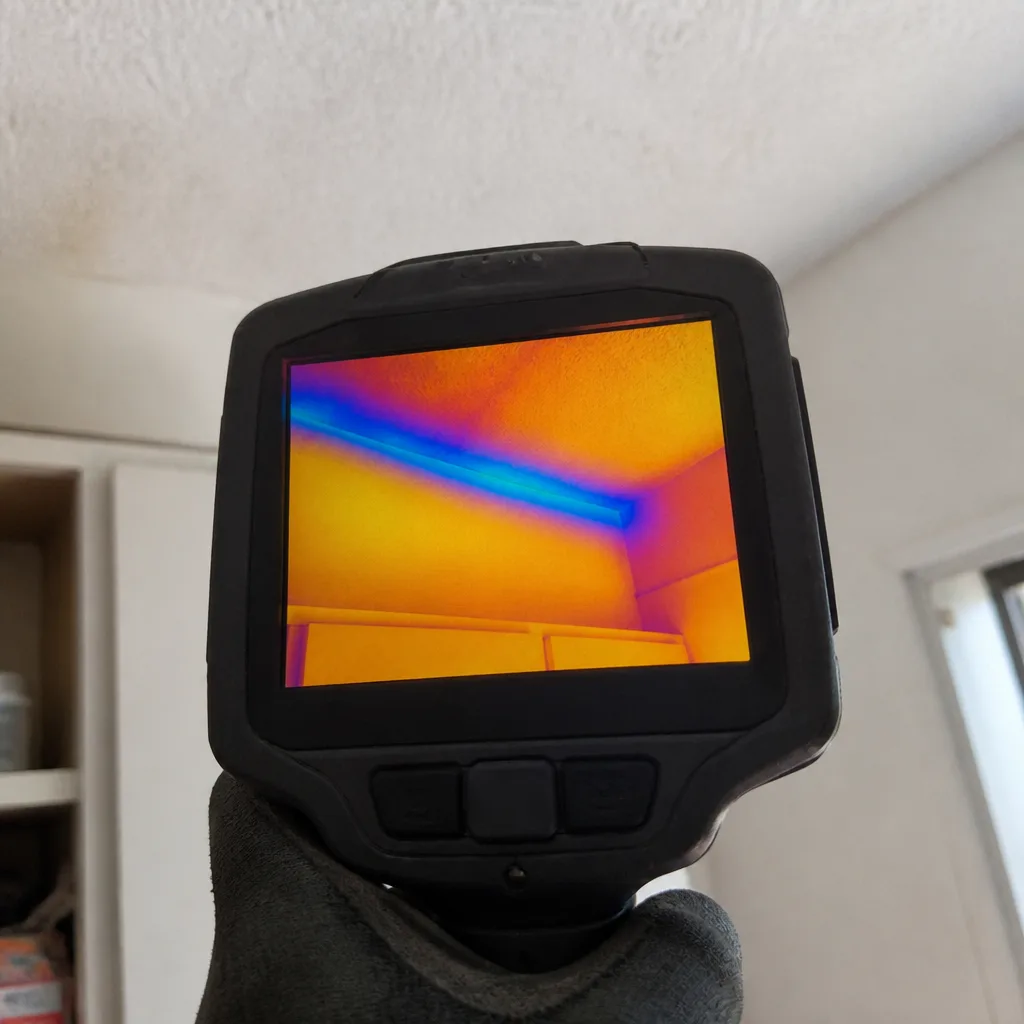
Blown-in cellulose or fiberglass over an already-sealed attic floor can be a manageable DIY job if you rent a blower, wear proper PPE, and have a helper feeding the machine. But the effectiveness ceiling is real. Without a blower door test and an infrared camera, you won’t know if you actually sealed everything. Without depth markers and consistent technique, you’ll get uneven coverage. In Cypress’s heat, uneven attic insulation translates directly to hot ceilings in specific rooms. We’ve seen DIY blown-in jobs with R-values that varied from R-19 to R-38 across the same attic. That’s not insulation failure. That’s application failure.
Spray Foam: Not DIY, Ever
Spray foam requires specialized equipment, precise temperature and humidity control, proper mixing ratios, and chemical handling training. A botched DIY spray foam job can off-gas, shrink away from framing, fail to cure, or trap moisture against wood. In a Cypress attic, a closed-cell foam mistake can mean tearing out the entire application. This is not a skill gap issue. It’s a chemistry and equipment issue. Even a homeowner with above-average construction knowledge should treat spray foam as a professional-only zone. The cost of correcting a DIY foam failure exceeds the cost of the professional installation by a wide margin.
Existing Wall Cavities: Not DIY
Insulating the walls of an existing Cypress home means either drilling through siding or drywall, or going in from the attic. This is where the DIY ceiling is hardest. Drilling and filling wall cavities with dense-pack cellulose requires professional equipment, and the risk of wiring, plumbing, or fire blocking miscues is high. Done wrong, you get voids that no one can see, which means the insulation isn’t doing anything and you have no idea. This is a professional-only zone, no exceptions. Our blown-in insulation service in Cypress exists specifically because wall cavity work demands equipment and access knowledge that no reasonable DIY guide can provide.
Title 24 and Permits: What California Law Requires for DIY Insulation
California’s Title 24 Building Energy Efficiency Standards apply to insulation work in Cypress, and they don’t care whether you or a contractor does the job. The question is what triggers compliance requirements. Replacing existing insulation with the same type and R-value is generally considered maintenance and does not require a permit. But changing the insulation type, increasing the R-value beyond current minimums, or adding insulation where none existed can trigger compliance verification requirements. For full details, see Insulation Permits, Codes & Inspections in CA: What You Need to Know.
The practical reality for Cypress homeowners:
- If you’re adding attic insulation to an existing home, you likely need to meet the prescriptive compliance requirements for climate zone 8, which includes specific minimum R-values for attics (R-38 for most prescriptive paths) and, critically, quality insulation installation (QII) verification if you’re claiming certain compliance benefits.
- QII requires a HERS rater to inspect and confirm that the insulation is installed without voids, gaps, or compression. That third-party verification applies regardless of whether you or a contractor does the install.
- If you’re doing the work yourself and skip the HERS verification, you’ve created a compliance documentation gap that will surface at resale.
For Cypress homeowners selling a home, the resale disclosure process now commonly asks whether any energy efficiency upgrades were performed and whether documentation exists. An unpermitted or unverified DIY insulation job becomes a negotiation liability. We’ve had prospective clients in Cypress tell us they had to either produce compliance records or subtract the cost of a professional retrofit from their sale price. The cost to correct can range from $1,500 for a documentation problem to $8,000+ for a full re-insulation. That’s the hidden cost of treating insulation as a casual DIY project.
The Real Cost of DIY: Tools, Rentals, PPE, and Disposal
The sticker price of a DIY insulation project always looks better than it is. Here’s what actually leaves a Cypress homeowner’s wallet:
- Blower machine rental: $75 to $120 per day from a local equipment rental yard. If your project runs into a second day, that doubles.
- PPE: $40 to $90 for a real respirator (N95 or P100), goggles, work gloves, and a disposable coverall. Fiberglass and cellulose dust in a hot attic makes skipping PPE a genuinely bad decision.
- Removal and disposal: If you’re removing old insulation first (needed for rodent contamination, mold, or water damage), Cypress disposal fees and bag costs add $100 to $250 depending on volume. The local landfill charges by weight, and wet insulation is heavy.
- Materials at retail price: Big-box stores charge homeowners 15 to 30 percent more per package than what a professional pays through supply channels. On an attic job, that’s $200 to $500 in material markup.
- Your time: A full attic insulation job takes a careful DIYer two full weekends, realistically. That’s 24 to 32 hours of labor in 100+ degree attic conditions during Cypress summers.
Here’s a real comparison for a typical 1,500-square-foot Cypress home with an attic at R-19 that needs to reach R-38 (see our Insulation Cost Breakdown: The Cypress Homeowner’s Reference for 2026 for deeper pricing analysis):
- DIY cost: $700 to $1,000 in materials and rentals, plus 24-32 hours, no warranty, no QII verification, and a result that may or may not hit the target R-value uniformly.
- Professional cost: $2,200 to $3,400 for blown-in fiberglass or cellulose from a Cypress insulation contractor, including air sealing, HERS verification when applicable, disposal of any old material, and a written warranty.
The savings look real until you factor in uneven coverage, no documentation, and the possibility of redoing the work. For a project where the failure mode is invisible, the DIY “discount” is often closer to paying twice.
The Decision Matrix: Project Type × Home Age × Moisture Risk × Code Exposure
Here’s the framework we use when Cypress homeowners ask us whether they should DIY or hire. Run your project through these four factors:
- Project type: What zone is it? Crawl space batt replacement and pipe insulation are DIY-appropriate. Attic work over unsealed bypasses is a gamble. Spray foam, wall cavities, and anything touching the building envelope’s air boundary are professional-only.
- Home age: Homes in Cypress built before 1980 often have no air sealing, minimal insulation, and construction patterns that predate current best practices. Older homes hide code issues (knob and tube wiring in attics, unvented bathroom fans, single-pane window assemblies) that turn a simple insulation job into a hazard. Newer homes (post-2000) generally have predictable assemblies and make DIY more feasible, though Title 24 means the compliance bar is higher.
- Moisture risk: Any area with visible moisture, condensation, or a history of dampness is a professional-only zone. Insulation installed over an unresolved moisture problem is a mold incubator. In Cypress, the combination of humid marine air and warm attics makes moisture assessment a required first step.
- Code exposure: If the project changes insulation type or R-value, you’re likely in Title 24 territory. If you need QII verification, a HERS rater is required. If you’re planning to sell within five years, the documentation gap is a direct financial liability.
Score it simply: if two or more factors lean professional, hire. If all four point DIY (crawl space batt replacement in a dry, 1990s home where you’re matching existing material and R-value), a competent homeowner can proceed with appropriate confidence.
Home Age and Moisture Risk: Why Older Cypress Homes Punish DIY Errors Harder
Cypress has a distinct housing stock profile. The city grew in two main waves: the post-war tract homes of the 1950s and 1960s in neighborhoods north of Lincoln Avenue, and the later subdivisions of the 1970s through 1990s that filled in east of Valley View Street. Each era carries different insulation realities.
Homes built before 1970 in Cypress typically have minimal or no wall insulation, R-11 or less in the attic, and construction that predates any meaningful air sealing strategy. The roof sheathing is often spaced-board or low-quality plywood. The vents are insufficient by modern standards. The electrical panels are original, which matters because adding insulation around old wiring requires attention to heat dissipation around conductors. DIY work in these homes exposes problems that a homeowner won’t recognize as problems until the damage is done.
Post-1990 Cypress homes are more forgiving. They generally have at least R-19 attic insulation, better roof decks, and more predictable framing. But they also have tighter envelopes and higher code requirements, which means Title 24 compliance is more likely to apply to any work you do. The forgiveness on the construction side is offset by stricter rules on the documentation side.
We’ve also seen how Cypress’s specific climate interacts with moisture. The marine layer brings humidity into wall cavities and attics that would stay dry in a desert climate. A DIY insulation job that accidentally blocks a soffit vent or pushes batts against the roof deck creates a moisture trap that turns humid air into condensation on the back of the sheathing. By the time you see the ceiling stains, the sheathing is already compromised. This is what we mean when we say older Cypress homes punish DIY errors harder: the correction cost is higher, the detection is delayed, and the failure mode is hidden.
What Professionals Do Differently: The Steps DIY Guides Leave Out
Here’s what a professional Cypress insulation contractor does that a weekend DIY project almost never includes:
- Pre-installation diagnostics: A blower door test to quantify air leakage and an infrared camera scan to identify the specific bypasses and thermal bridges. Without these, you’re guessing at where the problem actually is. Our spray foam and air sealing work in Cypress always starts with this diagnostic step, because the data changes the plan.
- Moisture and ventilation assessment: Checking relative humidity in the attic, confirming existing ventilation paths are open, and identifying moisture sources (roof leaks, unvented bath fans, dryer vents terminating indoors) before any material goes in.
- Manufacturer-specified installation for the chosen material: Whether it’s Johns Manville fiberglass or Knauf blown-in products, each material has an installation spec, and hitting the rated R-value requires following it precisely. Professional installers are held to manufacturer requirements, which matters for warranty validity.
- QII and HERS verification coordination: When Title 24 compliance applies, a professional manages the verification process, schedules the rater, and produces the documentation. This is invisible work that a homeowner doing DIY simply won’t have.
- Removal and disposal of old material: If old insulation is rodent-contaminated, water-damaged, or contains vermiculite (which may include asbestos), the removal needs proper PPE, containment, and disposal protocols. Cypress disposal rules don’t bend for homeowners.
This is the gap between DIY and professional: not the basic installation mechanics, but the diagnostic front-end work and the compliance paperwork that determines whether the installation actually performs and whether it can be legally documented. When we install attic insulation in Cypress, the inspection and air sealing are part of the job, not an optional add-on.
Common Mistakes to Avoid
- Insulating over unsealed bypasses. This is the single most common DIY error we see in Cypress attics. The insulation looks installed but performs at maybe 50 percent of its rated value because air is moving through it.
- Blocking soffit vents. Pushing batts or blowing insulation all the way to the eave edge cuts off attic ventilation, which turns the attic into a moisture trap. This is especially damaging in Cypress’s humid morning conditions.
- Compressing fiberglass batts to fit around framing or obstructions. Compression reduces R-value dramatically. A 6.25-inch batt compressed to 3.5 inches loses roughly 30 percent of its insulating value. This is an invisible error that no one caught until the energy bill arrives.
- Skipping the vapor considerations in crawl spaces. Installing faced batts with the vapor retarder on the wrong side in a crawl space can trap moisture against wood framing. The correct orientation depends on climate zone and assembly type, and Cypress’s mixed-humid conditions make getting this wrong consequential.
- Attempting spray foam without professional equipment. The DIY foam kits available online are not rated for large applications, and their failure mode is costly. In a Cypress attic, a poorly applied foam job means full removal, which is a five-figure correction.
- Ignoring Title 24 documentation. The energy efficiency work itself matters less at resale than the paper trail. A missing QII certificate or no record of the installation is a red flag for buyers and a deduction from the sale price.
- Removing old insulation without identifying the material. Homes built before 1990 may contain vermiculite insulation, which can include asbestos fibers. Disturbing it without proper testing and abatement protocols is a health risk. This is a hard stop: do not DIY removal if you’re unsure what the existing material is.
When to Call a Professional
Call a professional when the job touches the air boundary of your home, when Title 24 compliance applies, when moisture is present or suspected, when walls are involved, or when the existing insulation may contain vermiculite. Those are the professional-only zones, and the cost to correct a DIY mistake in any of them exceeds the labor you’d save by doing it yourself. Warmline Insulation Co. offers free estimates in Cypress. Call (657) 837-1179 and a live person will answer, 24/7. We’ve been in business since 2011, and every job is backed by our 90-Day Done Right Promise: if it’s not done right, we make it right.
Frequently Asked Questions
DIY insulation is cheaper on the front end for accessible projects like crawl space batt replacement, where materials and rentals might total $300 to $600 versus $1,000 to $1,500 for professional work. But for attic, wall, or spray foam projects, DIY savings evaporate once you factor in blower rental, PPE, disposal fees, retail material markup, and the risk of redoing the work. Call (657) 837-1179 for a free estimate and an honest comparison for your specific home.
Replacing existing insulation with the same type and R-value is generally considered maintenance and does not require a permit. Changing insulation type, increasing R-value, or adding insulation where none existed can trigger Title 24 compliance requirements, including QII verification by a HERS rater. If you’re unsure whether your project requires documentation, a licensed Cypress insulation contractor can advise you before you spend anything.
Professional attic insulation in Cypress typically costs $2,200 to $3,400 for a 1,500-square-foot home going from R-19 to R-38, including air sealing and any necessary disposal. The range depends on current insulation condition, access, and whether vermiculite or rodent contamination requires removal first. Warmline Insulation Co. offers upfront pricing with no surprises, plus $50 off any repair over $250.
Blocking soffit vents and insulating over unsealed bypasses are the two mistakes we see most often in Cypress homes. Both create moisture conditions in the attic, and in Cypress’s humid morning climate, that moisture condenses on sheathing and framing. By the time staining is visible, the repair involves more than redoing the insulation.
Yes. Call (657) 837-1179 and a live person will answer 24/7 to schedule your free estimate. We serve all of Cypress, and most jobs are completed in a single visit.
It usually is, especially if the home has R-19 or less in the attic and no air sealing. A 20-year-old Cypress home likely predates current Title 24 minimums, and upgrading to R-38 with proper air sealing can cut cooling costs noticeably in summer. An energy audit is a good starting point to quantify the opportunity before you commit to insulation work.
The Bottom Line
The DIY insulation question isn’t about whether you’re capable. It’s about what happens when the work isn’t right. For visible, reversible jobs like crawl space batt replacement or pipe wrapping, a careful Cypress homeowner can succeed. For attic air sealing, spray foam, wall cavities, and anything requiring Title 24 documentation, the professional path is the only rational choice. The money you’d save doing it yourself is a fraction of what a hidden mistake costs to correct. When in doubt, get a free estimate first. You’ll at least know what the work costs before deciding whether to pick up a rental blower.
Written by Neil Ashford, Owner at Warmline Insulation Co., serving Cypress since 2011.