
Last updated September 16, 2026
Seasonal Insulation Care for Cypress: Year-Round Homeowner’s Guide
Santa Ana wind events in October and November don’t just bring fire risk; they create pressure differentials that push unconditioned air through every gap your insulation doesn’t cover, erasing weeks of energy savings in 48 hours. That’s the reality for homeowners in Cypress, California, where the Mediterranean climate looks forgiving on a calendar but quietly punishes insulation all year long. This guide replaces the generic “check your insulation annually” advice with a month-by-month care plan built specifically for this zip code, expanding on The Complete Guide to Insulation in Cypress. You’ll learn what to inspect each season, what you can safely do yourself, and when to pick up the phone.
Quick Answer
Seasonal insulation care in Cypress means adjusting your attention quarterly: inspecting attic insulation density and radiant barriers after summer heat, air sealing before fall Santa Ana winds, monitoring attic and crawl space moisture through winter, and checking for pest intrusion and scheduling energy audits in spring. Most homeowners should perform a visual attic inspection twice a year and call a licensed insulation contractor for a professional energy audit every two to three years; see our Attic Insulation Maintenance Checklist for Cypress Homeowners for details. Skipping seasonal care typically costs Cypress homeowners between $300 and $700 annually in wasted heating and cooling energy.
Table of Contents
- Summer (June-September): Heat, Density Loss, and Radiant Barrier Stress
- Fall (October-November): Santa Ana Winds and Pre-Winter Air Sealing
- Winter (December-February): Marine Layer Moisture and Condensation Risk
- Spring (March-May): Pests, Rebates, and the Audit Window
- The Cypress Seasonal Action Calendar
- Common Mistakes to Avoid
- When to Call a Professional
- Frequently Asked Questions
Summer (June-September): Heat, Density Loss, and Radiant Barrier Stress
Attic temperatures in Cypress regularly hit 150°F between June and September, and that sustained heat does more than make your air conditioner work harder. It physically changes your insulation. Fiberglass batts lose loft as the binders holding them together weaken under repeated heat cycling. Blown-in cellulose settles faster. Even spray foam, which is structurally stable, expands and contracts enough over multiple Cypress summers to create hairline gaps at framing joints if it wasn’t installed with proper depth.
What should you actually check during summer? Here’s a quick inspection list you can complete in about ten minutes from the attic hatch:
- Insulation depth. Use a yardstick to measure depth in at least three spots across your attic floor. For Cypress homes built before 1990, you’re often looking at R-19 or less when current Department of Energy guidance for this climate zone suggests R-38 to R-60. Heat doesn’t care what your insulation used to be; it cares what it is now.
- Duct seal integrity. If you have HVAC ducts running through the attic, look for tape peeling, gaps at register boots, and condensation staining on the duct wrap. Ducts leaking cooled air into a 150°F attic is like running your AC with a window open.
- Radiant barrier delamination. If a radiant barrier was stapled to your rafters, check for sagging, tears, or dust accumulation on the reflective surface. A dusty radiant barrier loses most of its reflective effectiveness; it needs to face an air gap and stay clean to reject heat.
One thing we’ve learned from performing attic insulation in Cypress for over a decade: most homeowners discover their problem the first week they run the AC, not during an inspection. The symptom is usually a bedroom that never cools down or an AC unit that runs from noon to 8 p.m. without cycling off. If that sounds familiar, your attic is probably losing the battle.
Summer is also the season when radiant barriers earn their keep, but only if they were installed correctly and remain intact. We recommend homeowners check roof-adjacent surfaces once in July or August, during peak load. If the attic feels like a sauna within 30 seconds of opening the hatch, the barrier isn’t doing its job.
Fall (October-November): Santa Ana Winds and Pre-Winter Air Sealing
Santa Ana events don’t just threaten fire; they also reveal every building-envelope leak in your house. The setup is simple: high pressure inland pushes air toward the coast through canyons and basins, and that air wants into your home. It finds the path of least resistance: can lights, attic hatches, plumbing penetrations, electrical boxes, and the top plates of interior walls. Air leaks mean your insulation, however good it is, can’t do its job, because insulation only works in still air.
The pre-winter air sealing ritual in Cypress belongs in October, before the first serious Santa Ana episode. Here’s the step-by-step approach:
- Schedule an air sealing check. This means either a blower door test conducted by a professional or a careful visual inspection of all ceiling penetrations from the attic side. A blower door test pressurizes your home and gives you a number, usually in ACH50, that tells you exactly how leaky the envelope is.
- Inspect weatherstripping and attic hatches. The attic hatch is one of the most consistently overlooked air leakage points in Cypress homes. Weatherstripping around the hatch perimeter plus a layer of foam board on the hatch itself costs under $40 in materials and typically cuts that leak by 80%.
- Check gable vents and soffit vents for damage. Wind-driven debris can clog soffit vents and reduce attic ventilation right when you need it most. This matters because a poorly ventilated attic in fall still holds summer heat, damaging shingles from underneath.
- Walk the exterior perimeter. Look for gaps where siding meets foundation, around hose bibs, and where utility lines enter the home. These gaps matter less for attic performance but a great deal for overall envelope integrity.
For homeowners in Cypress, fall is the right time to combine air sealing with insulation upgrades. That’s because air sealing before adding or replacing blown-in insulation in Cypress prevents you from burying leaks you’ll regret later. Sealing first means the insulation layer you add actually performs to its rated value.
And if you have batt insulation that’s been compressed or shifted, fall’s mild temperatures make it the ideal window for removal and reinstallation, since the attic hasn’t yet turned cold and damp. This is also the time to check whether your attic insulation depth is still meeting your expectations after a long hot season, before winter’s moisture arrives.
Winter (December-February): Marine Layer Moisture and Condensation Risk
Coastal humidity in winter is the season most Cypress homeowners ignore, and the season where moisture damage quietly begins. Morning marine layer sits over the city from late night through mid-morning, often from December through February, and that damp air infiltrates attics and crawl spaces. The problem isn’t rain; it’s persistent relative humidity above 60% in spaces designed to stay dry.
Condensation forms when warm, moist indoor air meets cold surfaces like the underside of roof sheathing on a cool Cypress night. That condensation drips onto your attic insulation, compresses it, and creates the conditions for mold. By the time you see a stain on the ceiling, the insulation above it has been compromised for weeks or months.
Your winter checklist should include:
- Check attic insulation for damp spots or musty odor. Crawl or walk carefully across the attic floor and feel the surface of the insulation near the eaves first; that’s where condensation typically begins.
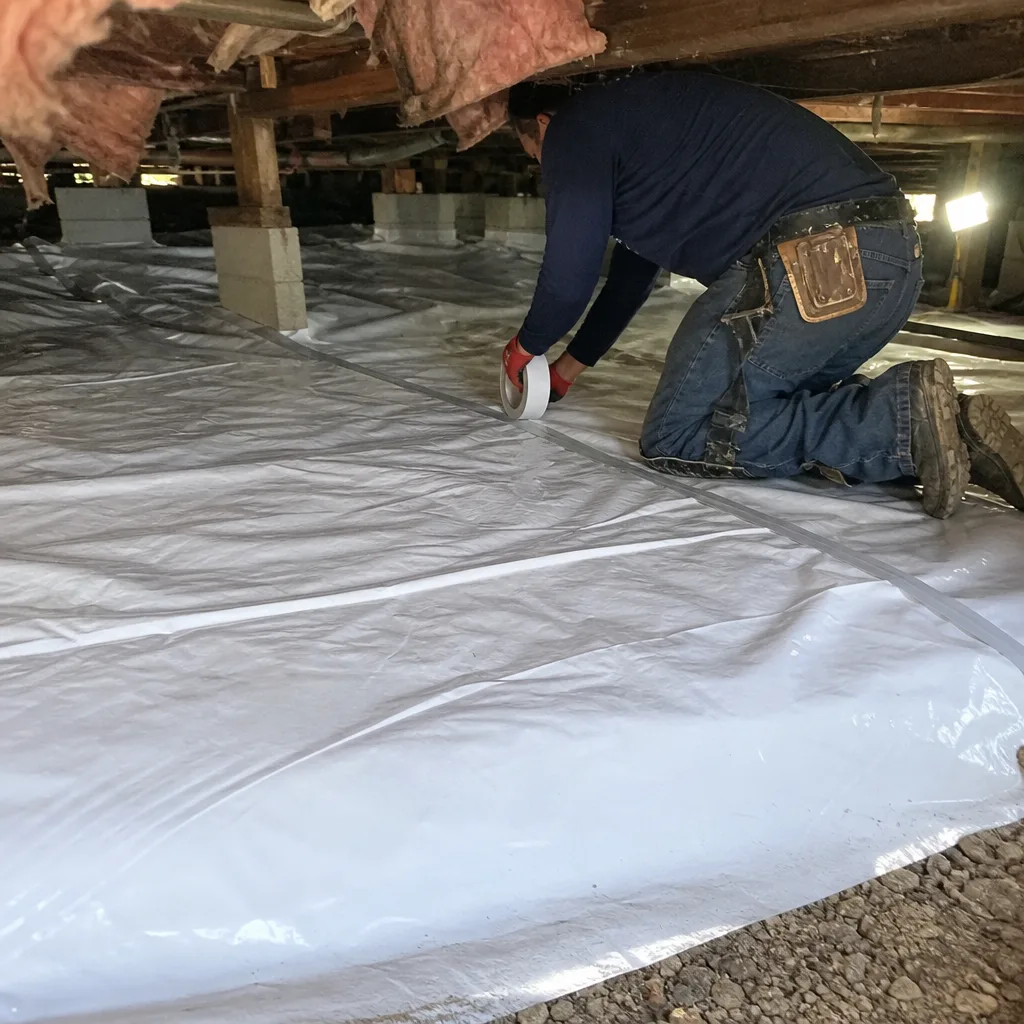
- Inspect the crawl space for standing water or high humidity. If your home has a vented crawl space, winter in Cypress is when you’ll see condensation on ductwork and floor joists. That moisture supports wood rot and attracts pests. This is the argument for crawl space encapsulation, which seals the space with a vapor barrier and changes the humidity game entirely.
- Look for bathroom and kitchen exhaust fans that vent into the attic. Every winter we encounter homes where a bathroom fan vents moist air directly into the attic rather than through the roof. That’s essentially pumping a humidifier into your insulation for 20 minutes after every shower.
- Check soffit vents for blockage. Insulation that’s been pushed too close to the eaves can block soffit vents, which stops the airflow that keeps an attic dry. This is a common installation error, especially in older Cypress homes where insulation was added by previous owners without baffles.
Water and insulation don’t mix. Wet fiberglass loses R-value, wet cellulose compresses permanently, and wet spray foam can harbor mold at its surface. If you find moisture, the fix is usually a combination of better ventilation, proper air sealing, and sometimes a vapor barrier in the crawl space. Winter is also an excellent time to have a professional confirm your attic ventilation is balanced, meaning intake at the soffits and exhaust at or near the ridge are working together.
Spring (March-May): Pests, Rebates, and the Audit Window
Spring in Orange County is pest breeding season, and your attic is prime real estate. Rodents seeking warmth in winter have already nested by March. Rats and mice tunnel through insulation, compress it, and leave droppings that contaminate what remains. Squirrels, rats, and opossums are all active across Cypress neighborhoods, and every one of them treats loose-fill insulation like bedding.
Spring is the right time to walk your attic and look for:
- Tunnels or trails through the insulation surface. Rodents create visible runways. If you see pathways, you have active or recent traffic.
- Droppings. Rat droppings are about half an inch long and dark. Mouse droppings are smaller and pointed. Either one means remediation time.
- Chewed wiring or air ducts. This is the serious safety concern. Rodent damage to wiring is a fire risk, and damaged ductwork leaks conditioned air.
- Entry points. Trim back tree branches touching the roofline. Check for gaps around roof vents, gable ends, and where utility lines enter the home. Rats can squeeze through a gap the size of a quarter.
If you find pest evidence, the right process is removal first, then attic cleaning and rodent proofing, then insulation replacement if the damage is extensive. Our team performs this sequence as a single job, because cleaning without sealing entry points just invites the next generation in.
Spring also matters because utility rebate deadlines in California frequently fall in Q1 and Q2. Programs vary by year and utility provider, but the pattern holds: if you’re considering an energy audit or insulation upgrade, the time to check available incentives is spring, not summer. A home energy audit is the diagnostic starting point that makes every other service smarter and more targeted. It shows exactly where your home is losing energy and what the payback period looks like for each fix.
This is also the season when we encourage Cypress homeowners to take advantage of our $89 Seasonal Tune-Up. It’s a low-cost way to have a technician inspect your attic insulation, check for air leaks, evaluate moisture, and flag any pest activity before the summer heat, without committing to a full project.
The Cypress Seasonal Action Calendar
Here is a one-page seasonal action calendar you can print and tape to the inside of a garage cabinet, or explore more guides & resources for year-round insulation care. It divides each season’s tasks into DIY and Call a Pro categories, so you know exactly where the line is.
June-August: Heat Management
DIY: Measure attic insulation depth in three locations. Check that soffit vents aren’t blocked. Look for duct tape peeling. Note which rooms never cool down. Check gable or attic fan operation if you have one.
Call a Pro: If attic insulation is below R-30. If radiant barrier is sagging or coated with dust. If ducts are leaking. If all upstairs rooms are consistently 8°F warmer than the thermostat setting.
September-November: Wind and Air Sealing
DIY: Weatherstrip the attic hatch. Caulk visible gaps around ceiling fixtures. Check weatherstripping on exterior doors. Inspect the attic for daylight visible through the roof deck. Note any room that feels drafty on windy days.
Call a Pro: For a blower door test. For spray foam insulation in Cypress to seal the rim joist areas or other hard-to-reach envelope gaps. For attic air sealing before adding new insulation.
December-February: Moisture Watch
DIY: Feel attic insulation surface for dampness once per month. Look at the underside of the roof sheathing for moisture staining. Check crawl space for standing water. Run exhaust fans during and after showers. Inspect bathroom fan ducting where visible.
Call a Pro: If insulation is damp or moldy. If condensation appears on ductwork in the crawl space. If you suspect bath fan venting into the attic. For crawl space encapsulation consultation.
March-May: Pests and Planning
DIY: Walk through the attic looking for pest trails and droppings. Trim tree branches touching the roofline. Check utility rebate programs for current availability. Note any musty odor when you open the attic hatch.
Call a Pro: If you find droppings, trails, or chewed materials. For attic cleaning and rodent proofing. For a full home energy audit. To take advantage of the $89 Seasonal Tune-Up before summer heat hits.
Common Mistakes to Avoid
- Adding insulation over wet insulation. The single most expensive mistake we see in Cypress. New insulation placed over damp material simply locks the moisture in place and accelerates the problem. Remove and replace.
- Sealing the attic hatch but forgetting the attic stairs. Pull-down attic stairs are a massive leak point, and weatherstripping only the perimeter of the hatch while ignoring the stair unit itself accomplishes almost nothing.
- Blocking soffit vents with new insulation. Baffles exist for a reason. Without them, loose-fill insulation pushed to the eaves shuts down the intake side of your attic ventilation system and raises moisture risk through the Cypress winter.
- Treating pest issues with poison before sealing entry points. Dead rodents inside wall cavities and under insulation create an odor problem for months. Removal, exclusion, and cleaning happen first; then you think about insulation.
- Skipping the energy audit because “insulation is insulation.” A home in northern Cypress near the 605 faces different heat and noise profiles than a home in the south end near Los Alamitos. An audit tells you what’s actually wrong. Insulation without diagnosis is guesswork.
- Assuming your builder-grade insulation is fine because the house is new. Many Cypress homes built in the 2000s got minimum-code insulation, which means R-30 in a climate where R-49 to R-60 is now recommended. You don’t need a problem to benefit from an upgrade.
When to Call a Professional
Call a licensed insulation contractor when you find wet or moldy insulation, evidence of rodents, visible duct leaks, attic insulation depth below about 12 inches of fiberglass or 10 inches of cellulose, or rooms that won’t hold temperature. These are not DIY fixes. Wet insulation requires removal and disposal, rodent remediation requires safety equipment, and resolving persistent temperature imbalance requires diagnostic testing that tells you where the air and heat are actually moving. Warmline Insulation Co. offers free estimates in Cypress. Call (657) 837-1179 and a live person answers, 24/7, no voicemail runaround. We’ll send a background-checked, uniformed technician to evaluate your home and give you upfront pricing, with most jobs completed in a single visit. Every job is backed by our 90-Day Done Right Promise: if it’s not done right, we make it right.
Frequently Asked Questions
Most attic insulation should be evaluated every 10 to 15 years, but replacement timing depends on type and condition. Fiberglass batts typically last 15 to 20 years if they stay dry and uncompressed, while blown-in cellulose settles and may need topping up or replacement sooner. If you’ve had rodent activity, roof leaks, or major renovations, plan on replacement sooner. Call (657) 837-1179 for a free attic inspection and we’ll tell you honestly whether replacement is necessary.
A visual inspection and minor air sealing typically costs between $150 and $400, while our $89 Seasonal Tune-Up covers a technician inspection of attic insulation, air leaks, and moisture. Full insulation upgrades for an average 1,800-square-foot Cypress home typically range from $2,500 to $7,000 depending on insulation type and accessibility. Estimates are always free.
Yes, if you follow basic safety precautions: use a proper ladder, wear a dust mask and gloves, step only on joists, and take a flashlight. Never walk on drywall. That said, we recommend homeowners limit their inspections to visual checks of insulation depth and moisture. Full assessments involving air quality testing, pest contamination, or evaluating spray foam adhesion should be handled by a professional with the right equipment and experience.
It depends on the condition. If more than about 30% of your insulation is compressed, water-damaged, or contaminated, replacement is usually more cost-effective than repair. Spot-repairing small sections and topping up depth with additional blown-in insulation often makes sense for minor settling. We’ll walk your attic with you and show you exactly what we’re seeing before we recommend either path.
For Cypress, blown-in fiberglass or cellulose at R-38 to R-60 works well for most attics, while spray foam insulation offers superior air sealing for homes with ductwork in the attic or crawl space. Radiant barriers are especially effective here given summer attic temperatures. The best approach is a combination selected after an energy audit shows where your home is losing energy most.
Most homeowners policies cover insulation replacement when the damage is caused by a covered peril, like a sudden roof leak from a storm or fire damage. Insulation damage from gradual neglect, long-term moisture, or rodents is typically not covered. If you’re uncertain, your insurance adjuster can clarify your policy. We’re happy to provide documentation and photos for a claim if the damage qualifies.
The Bottom Line
Cypress insulation doesn’t fail all at once; it fades, settles, compresses, and gets compromised season by season. Summer heat breaks down insulation binders, fall winds exploit every unsealed gap, winter moisture seeps into attics and crawl spaces, and spring pests make themselves at home in your loose-fill. The fix is a seasonal routine: measure in summer, seal in fall, inspect for moisture in winter, and check for pests in spring. None of it takes more than an afternoon, and the savings in energy and prevented damage adds up to thousands over time. When any season’s inspection turns up a problem beyond DIY scope, a licensed Cypress insulation contractor can diagnose it properly and repair it under one guarantee, one visit, and one upfront price.
Written by Neil Ashford, Owner at Warmline Insulation Co., serving Cypress since 2011.